New roofs and re-roofing in Macclesfield
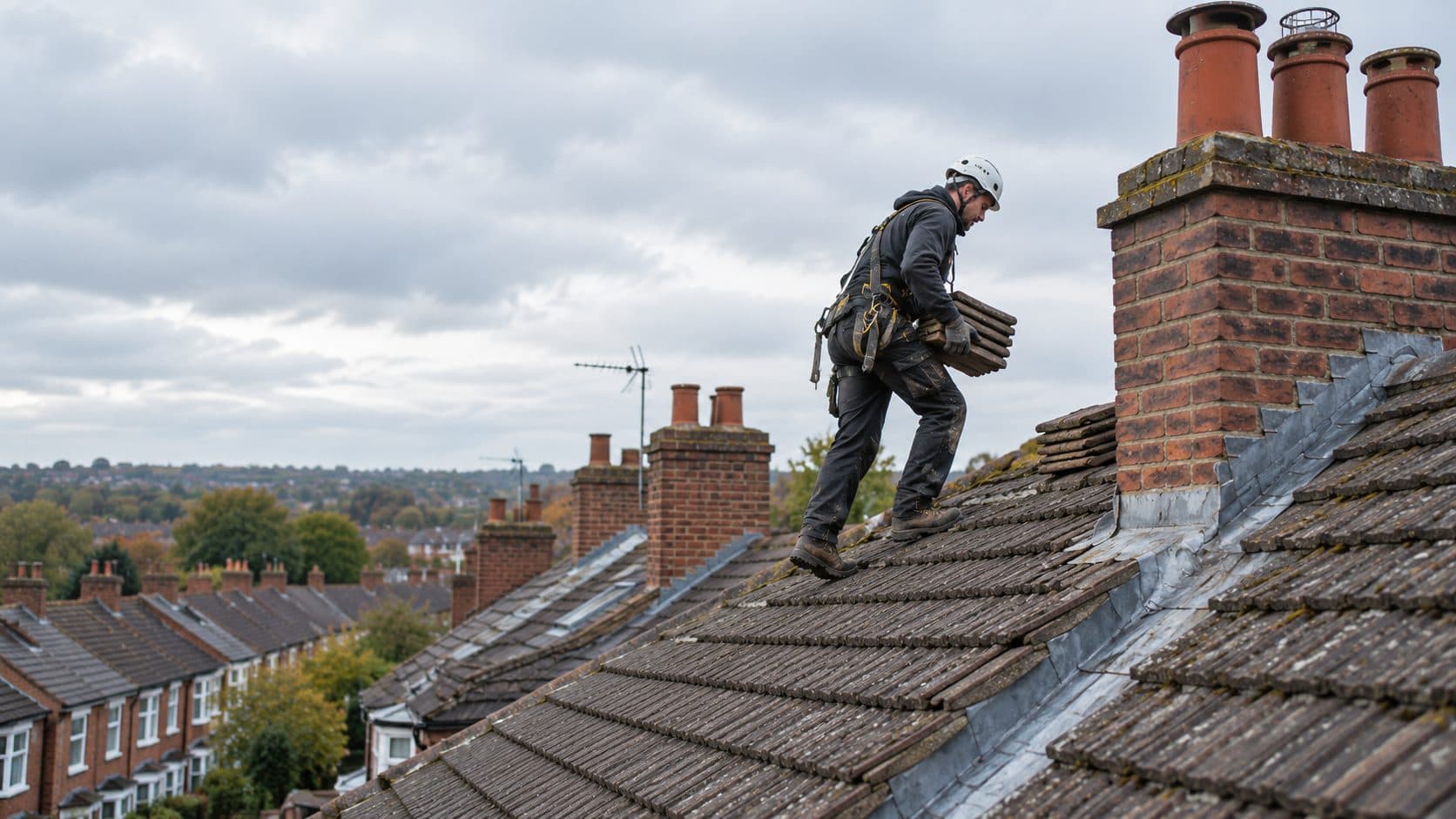
A new roof means stripping the old slates or tiles, battens and felt back to the rafters, checking and repairing the timbers, and laying a new breathable membrane, new battens and new coverings. On most Macclesfield houses it is a one to three week job once the scaffold is up, and it should not need touching again for decades.
When a new roof makes sense
A roof needs replacing when repairs no longer hold: slates slipping across the whole slope because the nails have rusted, battens that have rotted, concrete tiles that have gone soft and porous, or a roof that has been patched so often that each storm brings a new leak. Replacing it once is cheaper than paying for scaffolding every winter.
Many Victorian and Edwardian terraces in Macclesfield still have their original Welsh slate. The slates themselves often have years left in them; it is the iron nails and the battens that have failed. In that case we can strip the roof, keep and sort the good slates, and relay them on new battens and membrane, topping up with matching reclaimed slate.
What a re-roof includes
Every quote sets out each of these so you can compare like with like:
- Scaffolding with edge protection, and a skip or waste removal
- Stripping the old coverings, battens and felt
- Checking rafters and replacing or strengthening any that are rotten
- A breathable roofing membrane, which lets moisture out of the loft and reduces condensation
- New treated battens at the spacing the slate or tile maker specifies
- The new slates or tiles, fixed to the current British Standard for your exposure
- New ridge, hip and verge details, mortar-bedded or dry-fixed
- New lead flashings, soakers and valleys where they are needed
- Loft ventilation at the eaves and ridge so the roof space stays dry
Choosing slate or tiles
Natural slate is thin, light for its strength and lasts a very long time; it is the right choice for most period houses and is often expected in a conservation area. Clay tiles suit some older cottages and many 1920s and 1930s houses. Concrete interlocking tiles are heavier and cheaper and are common on post-war homes.
Changing to a heavier covering, such as concrete tiles on a roof built for slate, can overload the rafters. Building Regulations require that to be checked, and we will tell you if a change of material needs a structural check first.
Building Regulations and planning
Re-roofing is building work. In England, replacing the coverings on more than a quarter of a roof normally falls under the Building Regulations, which cover the structure, insulation and fire safety of the new roof. A roofer registered with a competent person scheme can self-certify the work; otherwise it goes through building control at the council (Cheshire East in Macclesfield).
Like-for-like re-roofing usually does not need planning permission. Listed buildings need listed building consent for most roof work, and some conservation areas restrict changes of material. Our planning guide covers this, including the differences in Wales.
Signs a roof needs replacing, not repairing
- Slates slipping all over the roof rather than in one spot
- Rusted nail heads or slates that move when touched (nail sickness)
- Sagging along the ridge or between rafters
- Daylight through many places in the loft, or rotten battens
- Concrete tiles that are crumbling, laminating or covered in deep moss
- Repeated repairs in different places over the last few winters
Read before you decide
New roofs: questions people ask
How long does a new roof last?
A well-laid natural slate roof can last a century or more, with the fixings and battens the usual weak point. Clay tiles typically last many decades, and concrete tiles somewhat less. The membrane, battens, lead and ventilation laid with them matter as much as the coverings.
Can I stay in my house while the roof is replaced?
Yes. Most people stay at home. We strip and cover one section at a time so the house is never left open overnight, and we sheet the roof at the end of each day.
Do I need to tell my neighbours about a new roof?
On a terrace or semi it is good manners and often necessary: the scaffold may need access across a boundary, and work at a shared party wall can fall under the Party Wall etc. Act 1996, which applies in England and Wales. We will point out anything that affects next door.
Should I add insulation when I re-roof?
It is the cheapest time to do it. Where a roof is renovated substantially, the Building Regulations may require the insulation to be brought up to the current standard if that is technically and economically feasible. Insulation at ceiling level in the loft is often the simplest route.
Tell us what is happening with your roof
Call, or send a few details and a photo if you have one. We will come back to you, arrange a visit and give you a written quote before any work starts.