Fibreglass roofing (GRP)
A GRP roof is glass-reinforced polyester: layers of glass-fibre matting soaked in resin on a timber deck, finished with a coloured topcoat. It cures into one seamless, hard-wearing skin with no joints to fail, which makes it a strong choice for dormers, extensions, balconies and any flat roof that people walk on.
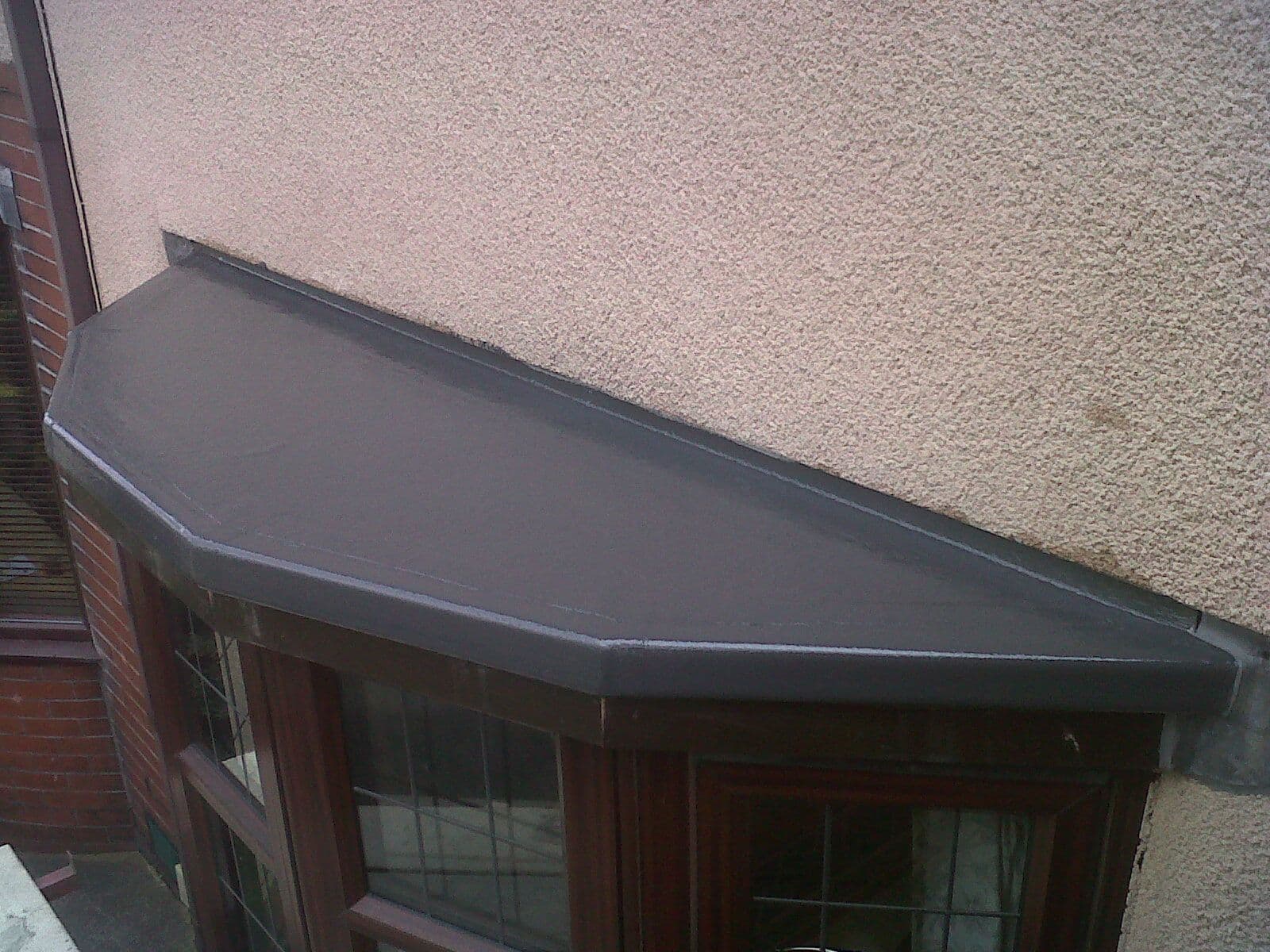
How a GRP roof is laid
We strip the old roof, check and repair the joists, and lay a new deck of boards suitable for GRP, usually over insulation to make it a warm roof. Preformed GRP trims are fixed around the edges. The laminate goes on next: resin, a glass-fibre mat, then more resin rolled through it so there are no air pockets. Once that has cured, a topcoat seals and colours the surface.
Resin needs dry weather and the right temperature to cure properly, so GRP is laid in a dry spell, never in the rain. In a Macclesfield winter that can mean waiting for the right days.
Where GRP works best
- Dormer roofs, where the shape has lots of corners and upstands
- Balconies and roof terraces, because the surface is hard and can be given an anti-slip finish
- Extensions and kitchen roofs where you want a neat, clean finish seen from upstairs windows
- Bay window roofs and porches, where small, detailed areas suit a liquid-laid system
- Valleys and gutters on pitched roofs, as GRP liners
GRP compared with EPDM and felt
GRP is the most rigid of the three. That is good for foot traffic and detailing, but it relies on a stable deck and well-fixed trims: if the deck moves, a rigid roof can crack. EPDM rubber is more forgiving of movement and quicker to lay on a simple rectangle. Torch-on felt is the traditional choice for larger areas.
Our flat roof guide compares the three in more detail, including which suits which kind of roof.
Read before you decide
Fibreglass roofing (GRP): questions people ask
Can you walk on a GRP roof?
Yes. A GRP roof can take occasional foot traffic for maintenance, and with the right laminate weight and an anti-slip topcoat it can be used as a balcony or terrace.
Can GRP go over an existing felt roof?
We do not lay GRP over old felt. The resin needs a clean, dry, suitable deck to bond to, and laying over felt traps any damp and hides rot. We strip back and lay a new deck.
What colour can a GRP roof be?
The topcoat comes in a range of colours. Grey and charcoal are the most common on houses, as they look closest to lead or slate when seen from above.
Can a GRP roof be repaired?
Yes. Cracks and damage can be ground back and relaminated with new resin and matting. A repair will usually show slightly against the old topcoat, but it bonds into the existing roof.
Tell us what is happening with your roof
Call, or send a few details and a photo if you have one. We will come back to you, arrange a visit and give you a written quote before any work starts.