Roof repairs in Macclesfield
Most roof leaks in Macclesfield come from a handful of places: a slipped or cracked slate, a ridge tile with failed mortar, a split lead flashing or a blocked valley. We find where the water is actually getting in, which is often not directly above the stain on your ceiling, and repair that part of the roof rather than selling you a new one.
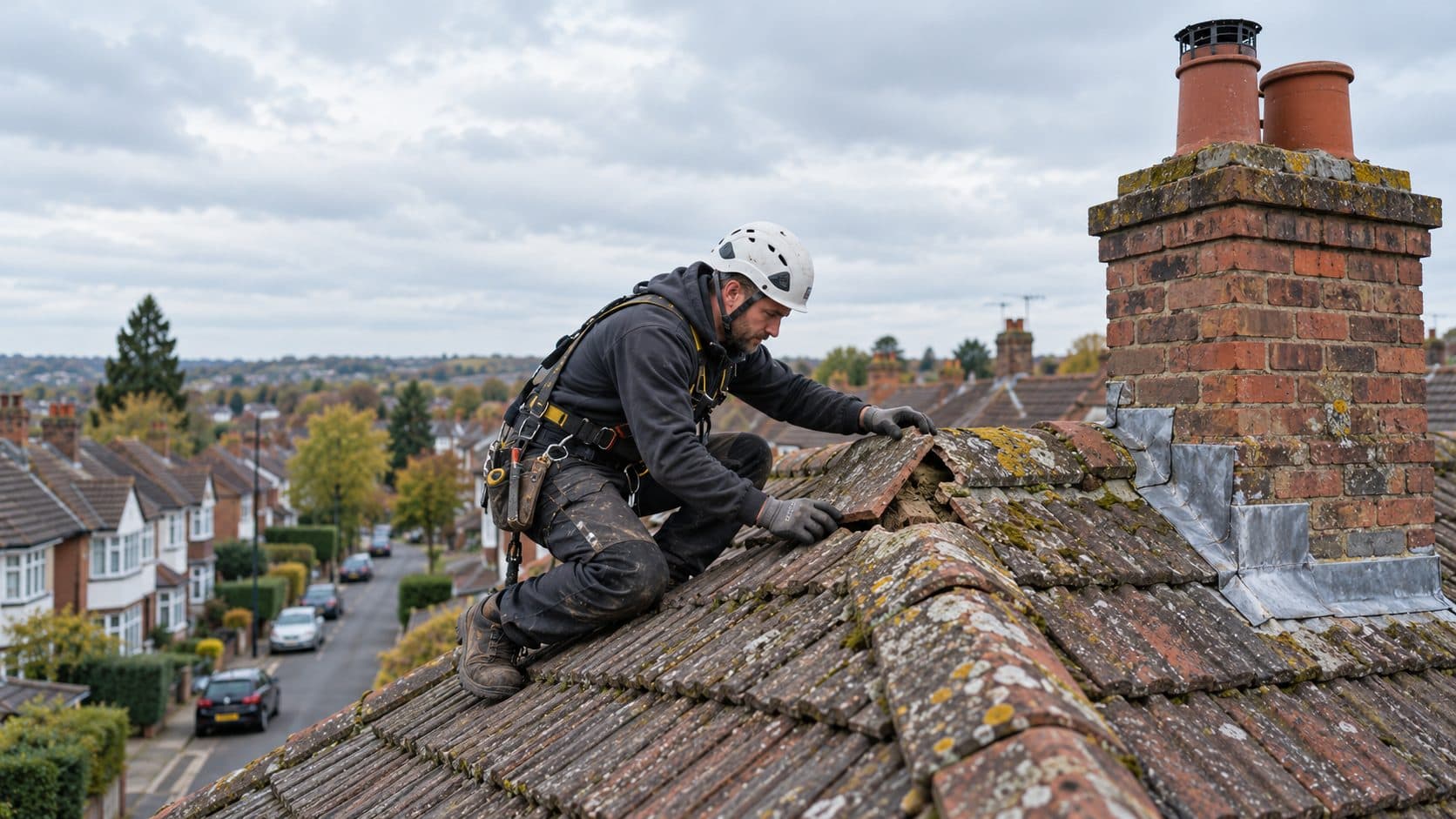
How we find a leak
Water travels. It can run along a batten or down a rafter for a metre or more before it drips, so the brown ring on the bedroom ceiling is a clue, not an answer. We start in the loft where we can, looking for wet timber, daylight and staining on the felt, then go onto the roof and check the coverings, the flashings and the gutters above that point.
On older Macclesfield terraces with no felt under the slates, the loft shows a lot: you can often see the exact slate that has slipped. On newer roofs with sarking felt or a breathable membrane, we follow the water marks on the membrane back up the slope.
If the cause is not obvious, we tell you so and explain what we would check next, rather than replacing parts of the roof on a guess.
Repairs we carry out
These cover most of the calls we get from homeowners in Macclesfield and the towns around it:
- Slipped, cracked or missing slates refixed with copper or stainless clips (tingles) or new nails
- Broken concrete or clay tiles replaced and matched as closely as the roof allows
- Ridge and hip tiles rebedded in mortar, or converted to a dry-fixed ridge system
- Valleys cleared and relined in lead, or with a GRP valley trough where lead is not suitable
- Lead flashings and soakers renewed where they meet chimneys, walls and dormers
- Verges repointed or fitted with a dry verge system
- Felt or membrane patched where it has torn under the tiles
- Gutter and downpipe faults that send water back under the roof
Repair or replace?
A roof with a few slipped slates and tired mortar is a repair. A roof where slates are slipping all over the slope, where the nails have rusted through (nail sickness), or where the battens are rotten, is usually past repairing in patches: you pay for scaffolding again and again while the problem moves around the roof.
We will tell you which one you have and why. If a repair buys you five or ten good years, we will say so. Our guide on whether to repair or replace a roof sets out the signs we look for.
What happens after you call
We ask what you have noticed and where, and whether you can send a photo. We arrange a visit, look at the roof, and give you a written quote that says what we will repair, how we will get up there safely (ladders, a tower or scaffolding), and roughly how long it will take. Nothing starts until you have agreed it.
After the repair we show you photos of what we found and what we did, because most people cannot see their own roof.
Signs your roof needs a repair
- A damp patch or brown stain on a ceiling, often worse after wind-driven rain
- Slates or bits of tile in the garden or the gutter
- Daylight visible through the roof from inside the loft
- A ridge tile that has moved or mortar washing down the roof
- Water dripping from the edge of a chimney breast or around a roof window
- Damp on an upstairs wall below where a roof meets a neighbouring wall
Read before you decide
Roof repairs: questions people ask
Can a roof be repaired in the rain?
Small emergency repairs, such as refixing a slate or covering a hole with a temporary sheet, can be done in light rain if it is safe. Mortar work, lead dressing and anything that needs a dry surface waits for a dry spell, because work done in the wet fails sooner.
Why does my roof only leak in certain weather?
A leak that only shows in wind-driven rain usually points to a slipped slate, a verge or a flashing on the side facing the weather, which in Macclesfield is normally the south-west. A leak that shows in any rain is more often a crack, a hole or a blocked valley or gutter.
Do I need scaffolding for a roof repair?
Not always. Many single slate or tile repairs on a two-storey house can be reached safely with roof ladders. Work on chimneys, ridges or a whole slope, and any work on a three-storey building, normally needs a scaffold or tower for safety. We explain which one your job needs in the quote.
Is a dry ridge system better than mortar?
A dry ridge system fixes the ridge tiles mechanically with clips and seals instead of bedding them in mortar, so there is no mortar to crack and wash out. It suits most concrete tiled roofs. On slate roofs and older buildings, especially in a conservation area, a mortar-bedded ridge is often still the right choice.
Will you match my existing slates or tiles?
We match as closely as we can. Second-hand Welsh slate is often available for older Macclesfield roofs, and many concrete tile profiles are still made. Some discontinued tiles cannot be matched exactly, in which case we may take good tiles from a hidden slope and use new ones there.
Tell us what is happening with your roof
Call, or send a few details and a photo if you have one. We will come back to you, arrange a visit and give you a written quote before any work starts.