Emergency roof repairs and storm damage
When water is coming through the ceiling, the first job is to stop more of it getting in: a temporary cover or a quick refix that makes the roof watertight, followed by a proper repair once the weather allows. Call us with what you can see, send a photo if you can, and keep yourself and your family away from any wet ceiling or loose material.
What to do before we arrive
These steps limit the damage and keep everyone safe:
- Turn off the electricity to any room where water is near light fittings or sockets
- Put a bucket under the drip and move furniture and electricals out of the way
- If a ceiling is bulging with water, keep people out of the room; do not stand under it
- Take photos of the damage inside and, from the ground, outside: your insurer will want them
- Do not go on the roof or up a ladder in high wind or rain
How we make a roof safe
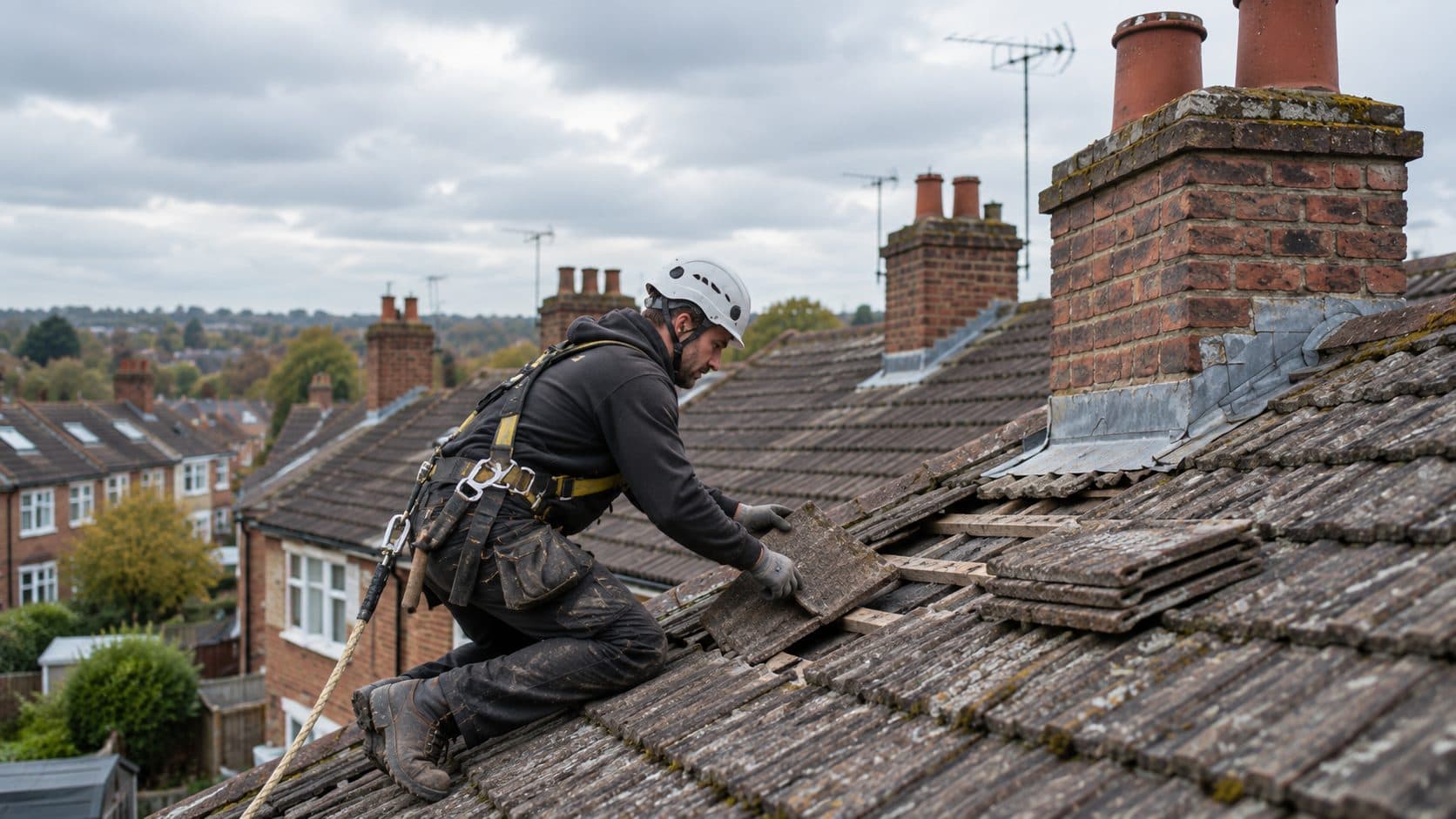
In an emergency we aim for watertight, not perfect. That can mean refixing slipped slates, fitting a heavy-duty temporary sheet over a damaged area, clearing a blocked valley or gutter that is overflowing into the house, or making a damaged chimney safe so nothing falls.
Once the roof is holding, we come back in better weather to carry out the permanent repair and give you a written quote for it.
Storm damage we see most around Macclesfield
Macclesfield sits on the western edge of the Pennines, and the strongest winds usually arrive from the south-west. The roofs that suffer are the exposed ones: houses facing open country towards Macclesfield Forest and the hills, and the higher parts of Bollington, Rainow and Langley.
The damage tends to be the same few things: ridge tiles lifted where the mortar had already cracked, slates stripped from verges and the windward slope, flat roof coverings peeled back at the edges, TV aerials and chimney pots brought down, and gutters pulled off fascias.
Insurance claims after storm damage
Most home insurance policies cover sudden storm damage but not wear and tear, so insurers look closely at whether the roof was in good order before the storm. Photos and a clear written description of the damage help. We can write up what we found and what caused it, with photos, for you to send to your insurer.
Check your policy before agreeing large work: some insurers want to approve the quote or send their own surveyor first. Our storm damage guide goes through a claim step by step.
Read before you decide
Emergency roof repairs: questions people ask
Is a leaking roof an emergency?
It is if water is reaching electrics, a ceiling is sagging, or the hole is large enough that more rain will cause major damage inside. A small drip into a bucket from a single slipped slate is urgent but can usually wait for a dry morning.
Will my insurance pay for an emergency roof repair?
Most buildings policies cover damage caused by a storm, and many cover reasonable emergency work to stop further damage. They usually exclude gradual wear, such as old mortar or rusted nails. Read your policy, keep receipts and photos, and tell your insurer early.
What counts as a storm for insurance?
Insurers set their own definitions, often based on wind speeds or heavy rainfall recorded near your home on the day. If you are unsure, ask your insurer what they need and note the date and time the damage happened.
Can you just put a tarpaulin on the roof?
A loose tarpaulin often blows off or holds water. When a temporary cover is needed we fix a heavy-duty sheet securely so it sheds water and stays put until the permanent repair.
Tell us what is happening with your roof
Call, or send a few details and a photo if you have one. We will come back to you, arrange a visit and give you a written quote before any work starts.