Lead flashing and leadwork
Lead keeps water out at the joints of a roof: where it meets a chimney or wall, in valleys between slopes, around dormers and on bay windows and porches. Most of the leaks we trace in Macclesfield come back to one of these joints, often old lead that has split or been patched with mortar. We dress new lead to the right thickness and lengths so it can move with the weather without cracking.
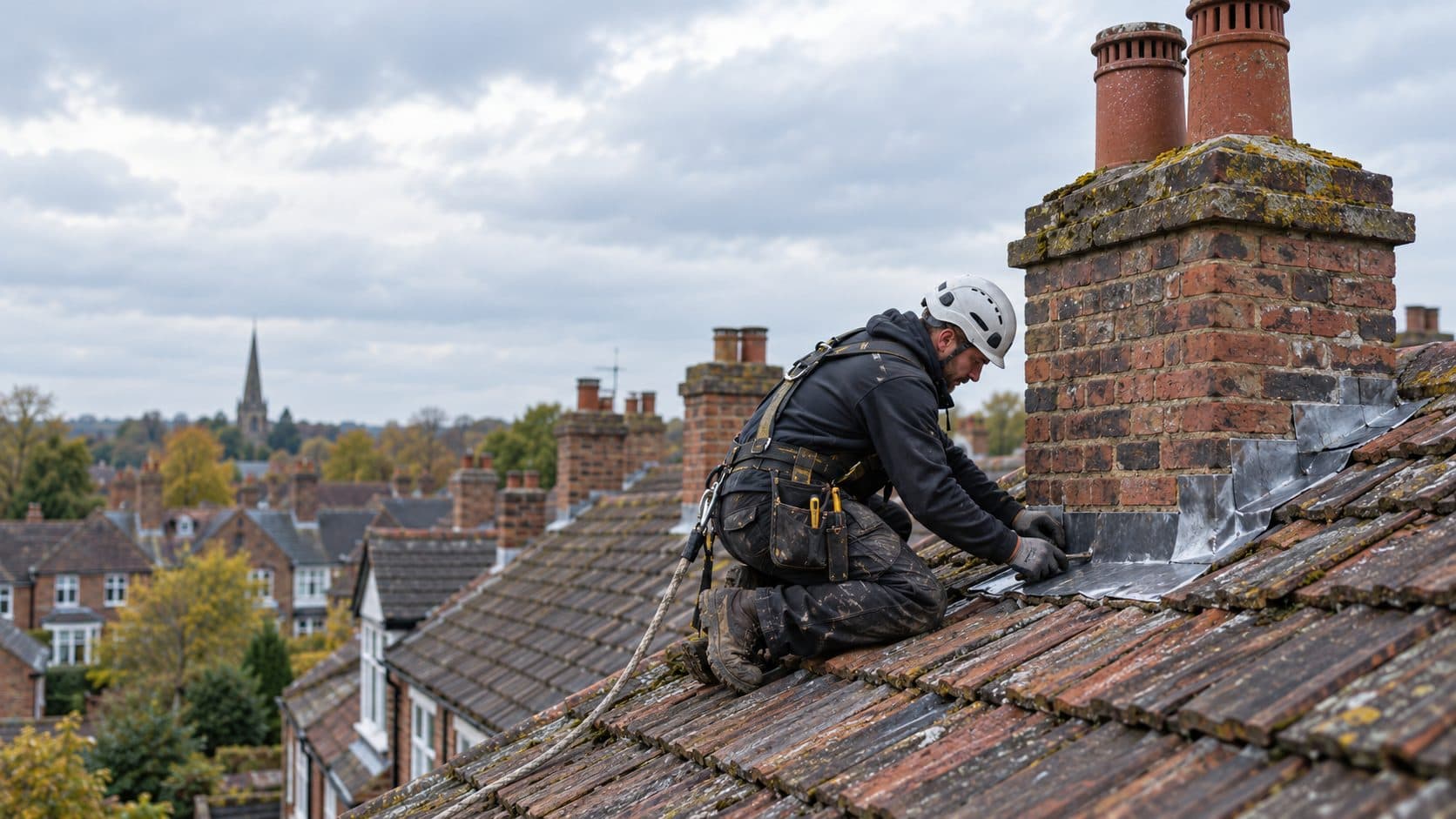
Where lead is used on a roof
- Step and cover flashings where a roof meets a chimney or a higher wall
- Soakers under each slate or tile along an abutment
- Valleys between two roof slopes
- Back gutters behind chimneys
- Dormer cheeks, tops and aprons
- Bay window and porch roofs, often in traditional rolls
- Parapet and box gutters on older town-centre buildings
Why lead fails
Lead expands and contracts with the temperature. If a piece is too long, too thin or fixed too tightly, it cannot move, and it cracks. Lead that has been badly dressed, or replaced with mortar fillets or flashing tape, is a common cause of leaks around chimneys.
Good leadwork follows the Lead Sheet Association's guidance on the code (thickness) of lead for each job and the maximum length of each piece. Joints are lapped or welted, not soldered across, so each piece can move.
Lead alternatives
Where lead theft is a risk, such as on a flat-roofed garage or a commercial building, or where a client prefers not to use lead, there are alternatives, such as GRP valley troughs and lead-replacement flashings. They are lighter and have no scrap value. On a period roof or in a conservation area, traditional lead is usually the right material.
Lead flashing and leadwork: questions people ask
What code of lead should be used?
It depends on the job. Thinner codes are used for soakers, while thicker codes are used for flashings, valleys and bay roofs that take more weather. The Lead Sheet Association publishes the recommended code for each use, and we follow it.
Why is my lead flashing coming away from the wall?
Usually because the mortar holding the top edge into the brickwork joint has failed, or the wedges have worked loose. It needs refixing into the joint and pointing, or renewing if the lead has split.
Is lead safe to have on my roof?
Lead on a roof is a long-established building material. We handle it with gloves, keep it away from food and wash after working with it, and treat new lead with patination oil to reduce staining run-off.
How long does leadwork last?
Well-laid lead of the right code can last many decades. Lead that was too thin, too long or fixed too tightly fails far sooner, which is why the detailing matters.
Tell us what is happening with your roof
Call, or send a few details and a photo if you have one. We will come back to you, arrange a visit and give you a written quote before any work starts.