Chimney repairs and repointing
Chimneys take the worst of the weather because they stand above everything else on the roof. Most chimney problems we see are worn mortar joints, cracked flaunching around the pots and failed lead flashings where the stack meets the roof, and all three let water into the house. We repoint, reflaunch, reflash, rebuild or remove stacks depending on what they need.
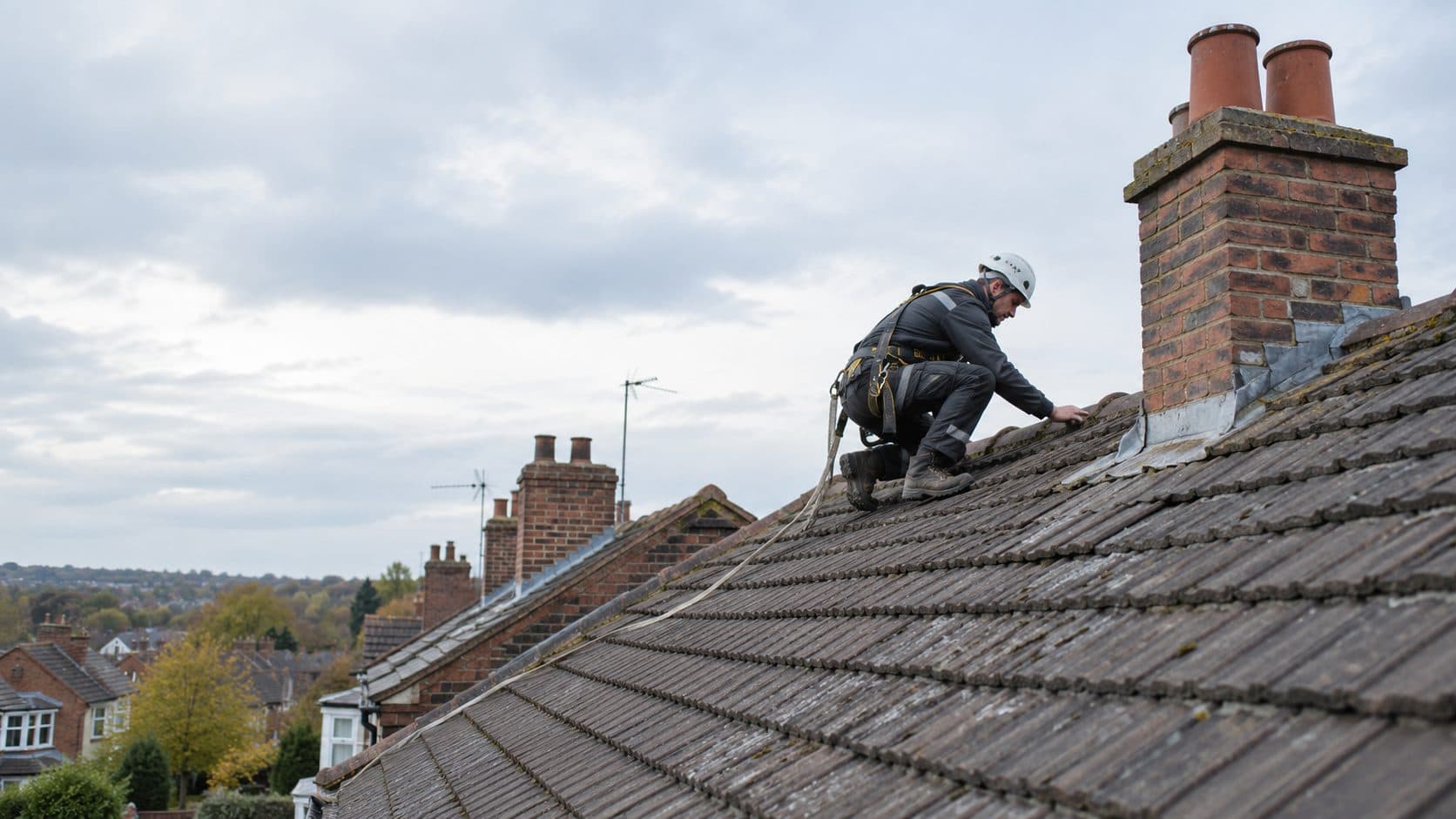
Chimney work we carry out
- Repointing: raking out loose mortar and pointing the joints again
- Flaunching: renewing the sloped mortar cap around the pots that sheds water off the top
- Pots and cowls: replacing cracked pots, fitting bird guards, rain caps or ventilated caps on unused flues
- Lead flashings: new soakers, step flashings, back gutters and aprons where the stack meets the slope
- Rebuilding: taking an unsafe or leaning stack down and rebuilding it from the roofline
- Removal: taking a stack down below the roofline and making good the roof over it
Why chimneys leak
Water gets into a chimney in four main ways: through porous brick and open mortar joints, through cracked flaunching at the top, down an uncapped flue, and around the flashings where the stack passes through the roof. The flashings are the most common cause on Macclesfield houses, especially where old lead has split or been replaced with mortar fillets that have cracked away.
A damp patch on the chimney breast inside can also be condensation or salts from years of coal fires rather than rain, so we check before we quote for work you may not need.
Removing a chimney stack
Many people remove an unused stack to stop leaks for good, or before re-roofing. Taking the stack down to below the roofline is roofing work. Removing the chimney breast inside the house is structural work: what is left above must be supported, and it needs Building Regulations approval.
If the stack is shared with a neighbour, as many are on Macclesfield terraces, the Party Wall etc. Act 1996 is likely to apply, and in a conservation area removing a chimney visible from the street can need permission. We check this before we start.
Unused flues and ventilation
If you have capped a fireplace, the flue still needs a little ventilation top and bottom, otherwise damp builds up inside the stack. We fit vented caps rather than sealing pots solid.
Signs your chimney needs work
- Damp or staining on the chimney breast or the ceiling next to it
- Mortar falling into the gutter or on the roof
- Cracked or missing flaunching around the pots
- Lead flashings lifted, split or replaced with cracked mortar
- A stack that leans, or bricks that are spalling and breaking up
- Debris or soot falling into the fireplace
Chimney repairs: questions people ask
Do I need scaffolding to repair a chimney?
Almost always. Safe chimney work needs a working platform around the stack. On some houses a chimney scaffold that sits on the roof is enough; on others a full scaffold from the ground is safer.
Do I need permission to remove a chimney?
Removing a stack is usually allowed without planning permission, but not always in a conservation area or on a listed building. Removing the chimney breast inside needs Building Regulations approval, and a shared stack can involve the Party Wall Act.
How often should a chimney be repointed?
There is no fixed schedule. Exposed stacks on the hills around Macclesfield weather faster than sheltered ones. Have the stack looked at whenever the roof is being worked on, and repoint when the joints are recessed or crumbling.
Can you repair a chimney in winter?
Mortar and lime work needs protection from frost while it cures, so repointing is best done outside the coldest months. Emergency work to make a dangerous stack safe can be done at any time.
Tell us what is happening with your roof
Call, or send a few details and a photo if you have one. We will come back to you, arrange a visit and give you a written quote before any work starts.